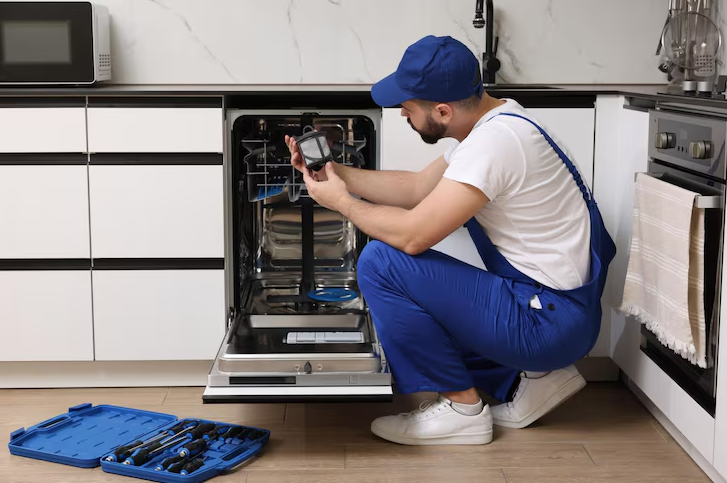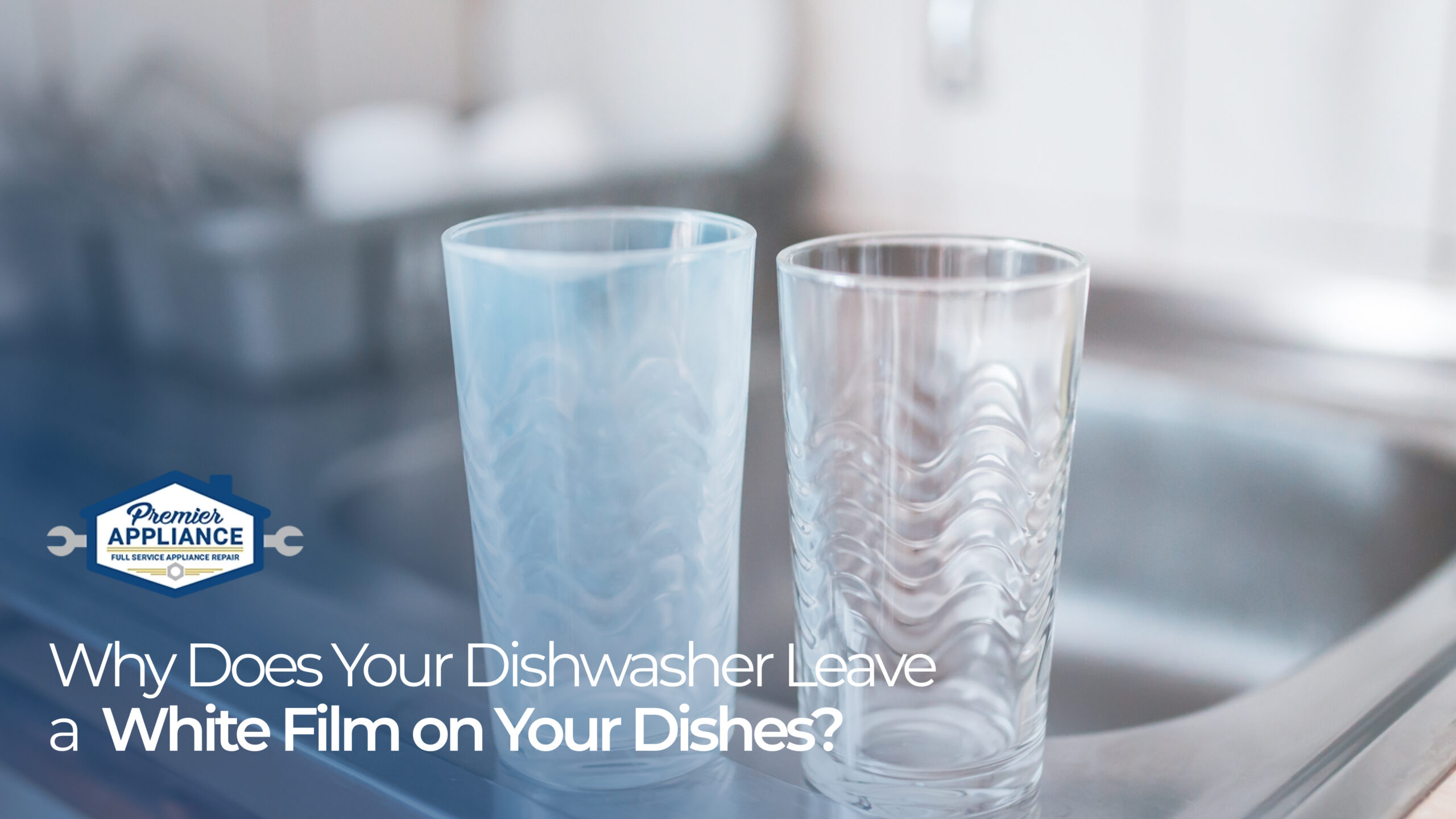
Doing the dishes is enough of a chore. Having to wash them again because they came out of the dishwasher covered in a white film? Even worse. What is this white film on your dishes? How can you get rid of it? These are questions that our appliance repair technicians hear all the time. There are a few common causes. Fortunately, there a few simple solutions. Let’s discuss the most common causes of white film on dishes and what you can do to say goodbye to cloudy, chalky looking kitchenware!
What is the White Film?
Most of the time, cloudy dishes are caused by hard water, detergent buildup, and/or rinsing issues.
Hard Water
Water can sometimes contain high mineral levels that lead to buildup in pipes and various household appliances. When hard water comes through your dishwasher, it can show up as white residue on your dishes. Over time, if left untreated, this buildup can cause extra wear and tear on your dishwasher itself.
If you are worried that hard water may be your leading issue when it comes to white film on your dishes, you can have your water tested just to be sure. You can test your water by yourself using test strips or contact your water supplier.
Detergent Buildup
Sometimes, the dishwasher detergent that you are using can be the culprit for white film on your dishes. If you use too much detergent, it may not be able to dissolve and fully rinse away throughout the wash cycle.
Liquid and gel detergents have a harder time breaking down in cold water cycles when compared to powder detergents. If you use liquid or gel detergent and have adjusted the amount that you use but you are still seeing buildup, you may want to consider trying a different detergent.
Rinsing Issues
Lastly, if you are seeing white film on your dishes, make sure that your dishwasher’s rinse cycle is working like it should.
Dishwashers today often use less water to be environmentally cautious. However, this can lead to your detergent not fully rinsing away. Be sure to schedule regular dishwasher maintenance and follow our recommended cleaning and DIY appliance maintenance tips to stay on top of rinsing issues!
Fighting Back Against Film and Getting Clean Dishes
So besides just using a different detergent or calling for maintenance, what else can you do to combat this ugly white film on your dishes?
Whatever the cause, there are a few options you can try. First, you can try using a rinse aid while running your dishwasher. While this also helps with water spots on dishes, the citric acid in the rinse aid should help to tackle and eliminate hard water stains. If you don’t have any rinse aid on hand, you can also just use white vinegar.
If you know that hard water is your issue, installing a water softener can help. Water softeners remove the calcium and magnesium minerals from your water that leave white residue on your dishes. You can purchase a water softener from a department store and have it installed to filter water throughout your entire home.
Other Helpful Dishwasher Tips
While we’re here, why not cover some other dishwasher tips?
To ensure that your dishwasher always runs smoothly, you should give it a nice deep clean at least once every six months. Make sure there are no clogs on or near the filter, clean the seals and spray arms, etc. While you are cleaning, make sure that the dishwasher rack’s wheels are aligned properly so the spray arms can rotate freely.
Also, do not overload your dishwasher. It can be tempting when you have a lot of dishes to clean. However, if there are too many dishes squeezed in there, water will not be able to reach where it should and you will be left with food stains and/or leftover detergent.
Call Premier Appliance For Your Dishwasher Repair and Maintenance Needs
In most cases, the white film left on dishes is mineral residue from hard water, although detergent buildup or poor rinsing can also cause it. To get rid of this chalky residue on your dishes, you can try a few different approaches. Make sure to test for hard water and get a water softener if needed. Don’t use too much detergent, and even try switching to a powder detergent versus liquid or gel. Also, use rinse aid and make sure your spray arm isn’t blocked so all of your dishes can be properly rinsed.
When in doubt, you can always book with us at Premier Appliance of Augusta. We have been servicing Augusta and the closely surrounding CSRA with dishwasher repair services for many years now. Whether it’s your dishwasher, refrigerator, or even your laundry appliances, our team provides exceptional service that you can trust.