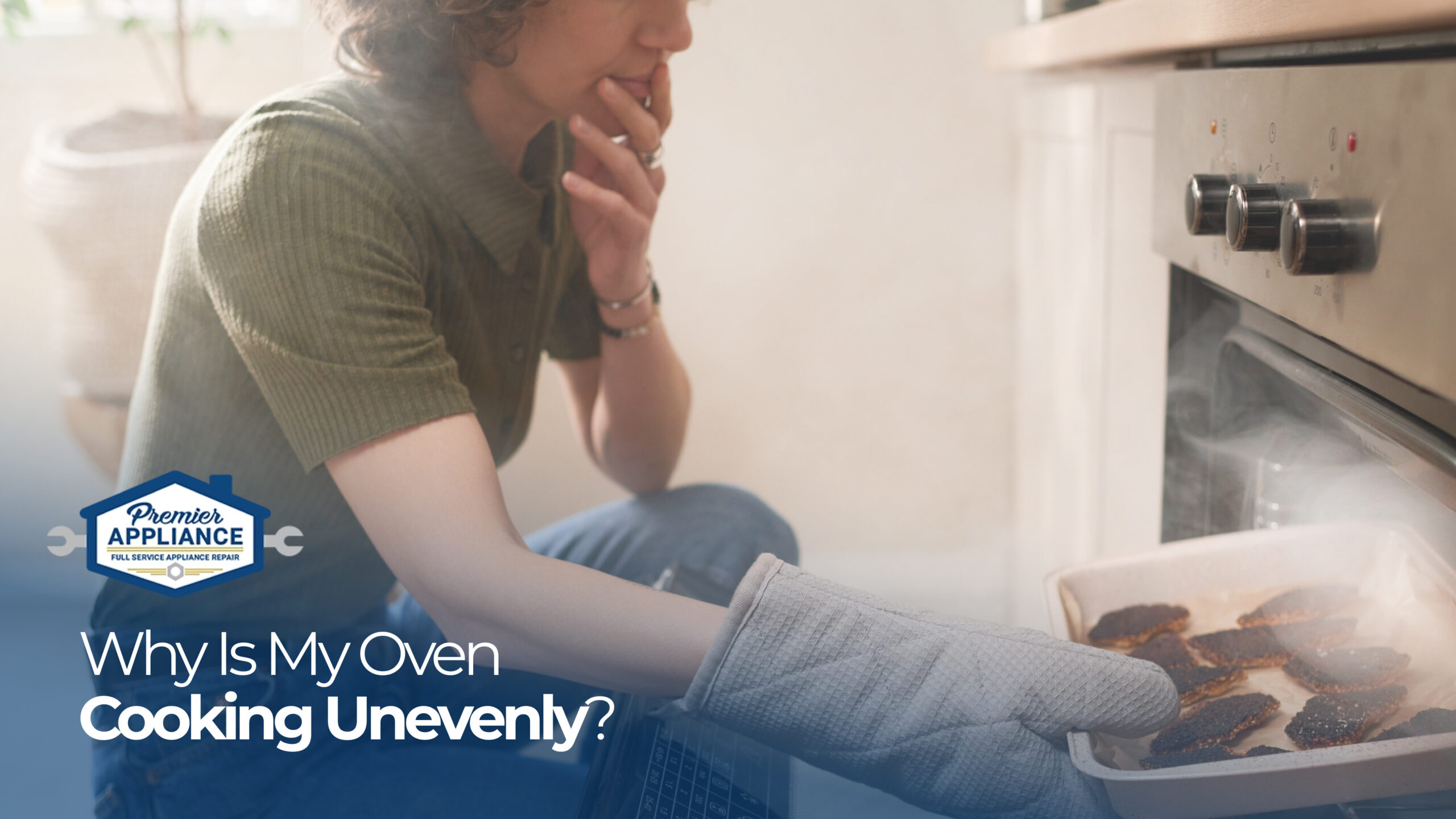
As the fall season approaches, that means more family dinners and holiday cooking are around the corner. When cookies start burning on one side but stay pale on the other, or casseroles come out cooked around the edges and cold in the middle, your oven could be trying to tell you something. However, just one unevenly cooked dish does not mean that your oven is doomed. Some reasons your oven may be cooking unevenly include incorrect rack placement or overcrowding. Or, you could be dealing with a heating or temperature-control problem.
Having trouble figuring out why your oven isn’t evenly cooking your food? Let’s discuss what you may be seeing, how you may be able to fix the issue, and when to call us at Premier Appliance of Augusta.
Why Is My Oven Cooking Unevenly?
Your oven may be cooking unevenly because the heat isn’t able to properly circulate or because the temperature isn’t staying consistent. Sometimes, this can be caused by overcrowding the oven, rack placement, cookware, or not allowing the oven to fully preheat before use. Other times, a faulty heating element, temperature sensor, or convection fan may be to blame.
Common Reasons Your Oven is Cooking Unevenly
Let’s take a closer look at these issues and see which ones you may be able to fix yourself and which ones require a professional.
Overcrowding and Rack Placement
Before you start tearing your entire kitchen apart, first look at what you are cooking and where in the oven you are cooking it. How much was in the oven at once when you realized your food came out half cooked in some places?
In order for your heat to be able to circulate properly around your food, it is recommended to leave at least two inches of space around baking pans and cookware when cooking. This includes above and below your baking pans. Make sure your racks allow your cookware to be evenly spaced, too!
Your Oven Isn’t Fully Preheated
It’s easy to get in a hurry and throw your dinner in the oven before it’s fully preheated. Starting too early, however, can affect cooking results.
Give your oven enough time to reach the temperature you’ve selected before putting your food inside. This may help improve uneven cooking, especially with temperature-sensitive recipes.
A Heating Element Isn’t Working Properly
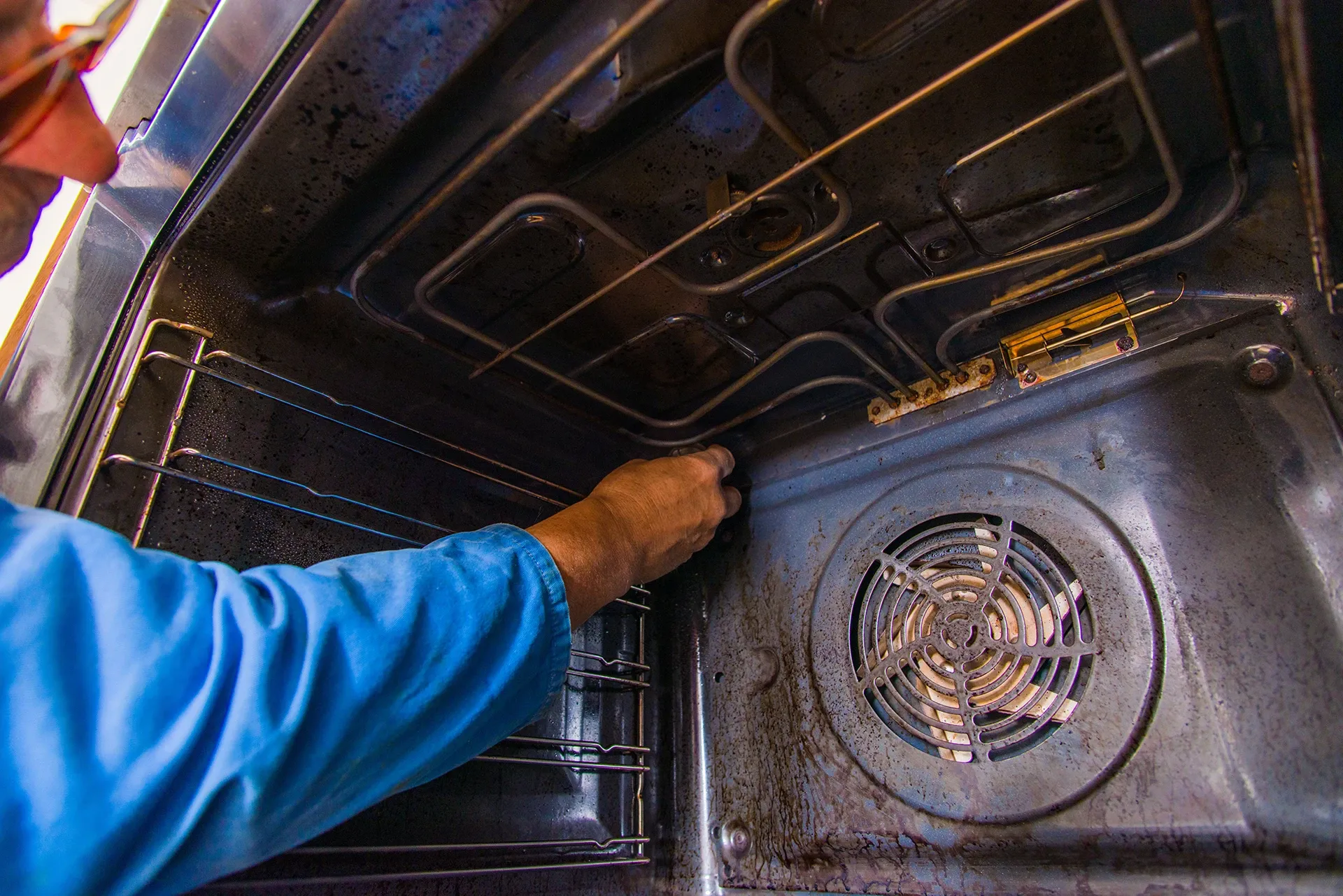
Another reason your oven may be cooking unevenly is that one of its heating elements isn’t working properly. Electric ovens may have issues with the bake or broil features, or may have a fault heating element that stops heating altogether.
Gas ovens may have a faulty igniter, gas supply issues, or a defective gas safety valve, causing the oven not to heat up or the burners to not ignite.
The Temperature Sensor or Convection Fan is Malfunctioning
Another possibility is a broken temperature sensor or malfunctioning convection fan.
Temperature sensors monitor the oven’s temperature while in use to increase or decrease the heat in order to maintain the right temperature. If the sensor is faulty or incorrectly positioned, it may affect how consistently your oven heats.
If your oven has a convection fan that isn’t working properly, heated air may not circulate as evenly, causing some areas of your food to cook faster than others.
How Can You Tell if Your Oven Has Hot Spots?
Ovens can have areas that run hotter than others. So, how do you find these hot spots?
You can perform a bread test. Place a few slices of bread on your oven racks, evenly spread throughout the oven. Then, bake the bread at 350 degrees Fahrenheit until the pieces in the center of the oven are nicely toasted, golden brown. When finished, take the bread out of the oven and assess the brownness of each slice. Are some pieces more burnt than others? Where were they in your oven?
Keep in mind that your oven is its hottest around the sides, top, and bottom. You can use the results of your bread test to your advantage by cooking things nearer or farther from your hotspots, depending on what you are baking. Unless, that is, some of your bread came out looking like charcoal while other pieces are still just… bread.
What Can You Check Before Calling for Oven Repair?
When do you throw in the towel and call for oven repair? Some checks you can safely perform yourself include:
- Confirming that the oven is fully preheated
- Adjusting rack placement
- Avoiding overcrowding the oven
- Testing a different baking sheet or dish
- Looking for obvious visible heating-element damage once the oven is cool
- Checking for error codes or unusual noises
Remember, do not disassemble your oven or attempt electrical or gas repairs without the proper knowledge and equipment.
Get Your Oven Ready for Holiday Cooking
If multiple dishes consistently cook unevenly despite adjusting your setup, it may be time for an inspection. Problems maintaining temperature, error codes, or malfunctioning heating components can indicate a repair issue. If there is ever a gas smell, stop using the oven, leave the area, and contact your gas utility company or emergency services from a safe location.
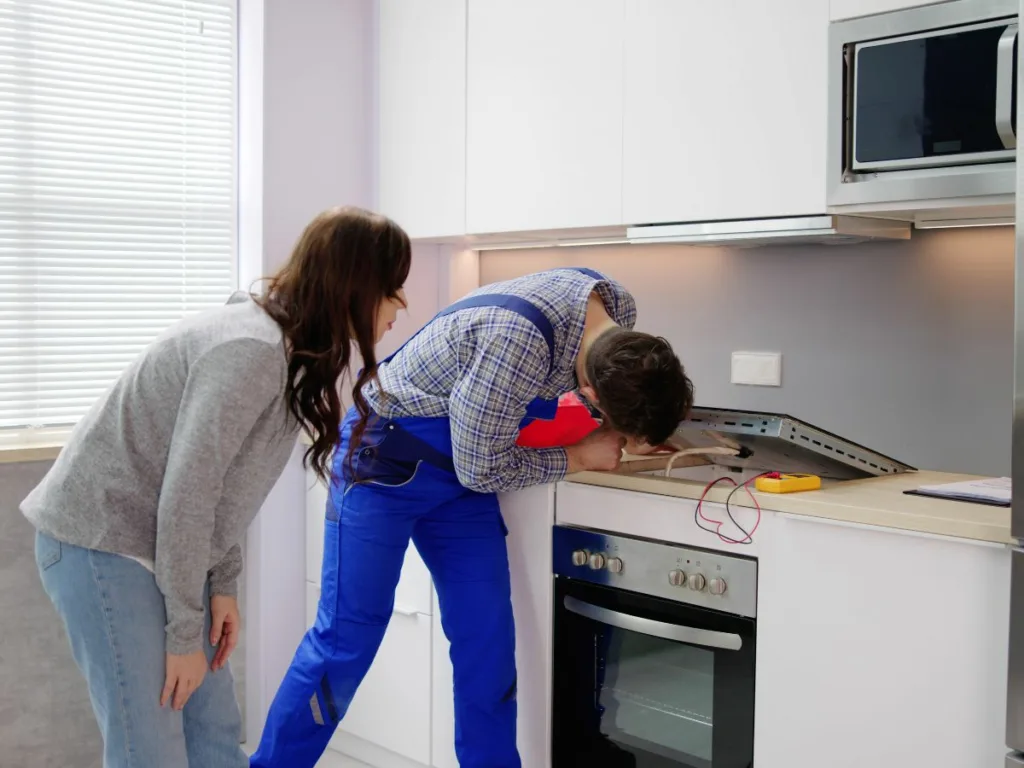
Catching these issues before Thanksgiving or any other holiday hosting can prevent last-minute kitchen frustrations. If your oven still isn’t cooking evenly, call Premier Appliance of Augusta. We proudly serve homeowners throughout Augusta, Evans, Martinez, and the surrounding CSRA with residential oven repair and other kitchen appliance repair services.